
Change Management: Enabling Blackboard Adoption During COVID-19
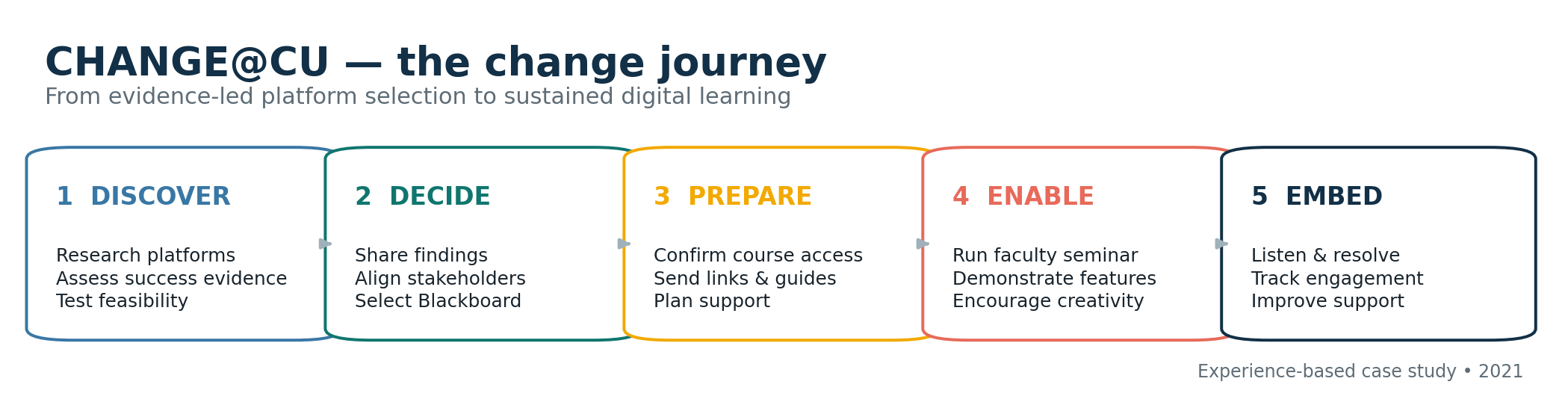
An experience-based Business Analysis and Change Management case study at Chandigarh University.
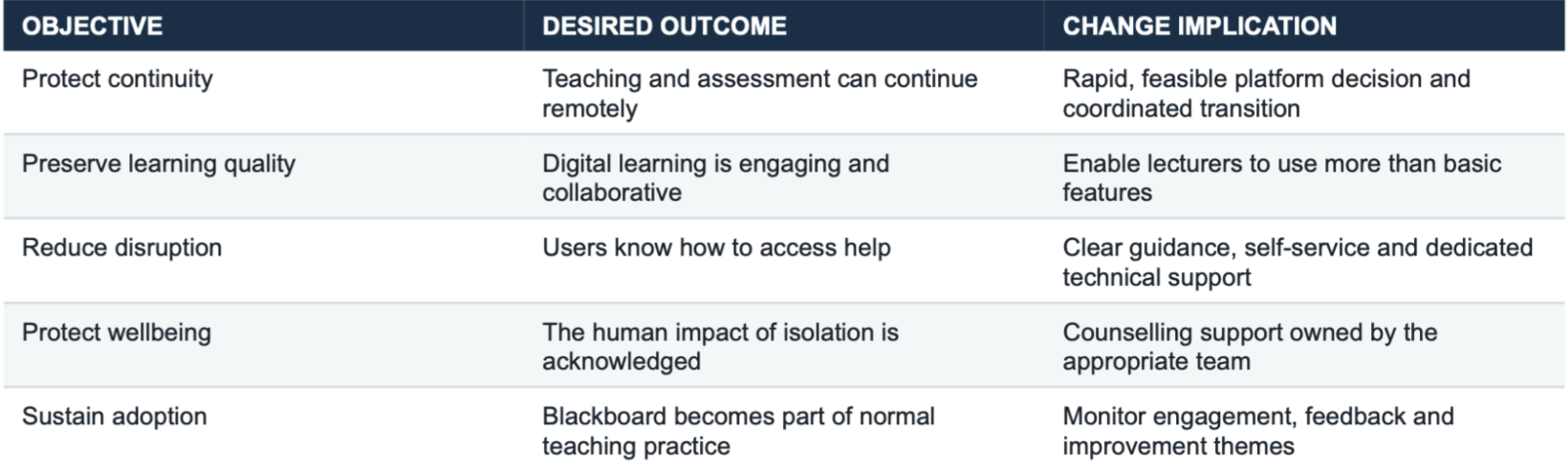
CORE QUESTION: How could Chandigarh University maintain teaching continuity while enabling lecturers and students to adopt an engaging, collaborative and sustainable digital-learning model?

THE OUTCOME: Blackboard was selected after platform research and financial/technical feasibility were discussed with relevant stakeholders. Students adapted quickly, lecturers used the platform creatively, and dedicated technical and wellbeing support were established through the appropriate owners.
My Contribution Across the Change Lifecycle
Researched leading online-learning platforms, their success evidence, financial feasibility and technical feasibility.
Discussed the analysis with relevant stakeholders and helped conclude that Blackboard was the best-fit platform.
Communicated the change to students and lecturers and coordinated across faculty, IT, admissions/administration and management.
Organised and delivered a one-hour faculty seminar focused on both essential functions and creative teaching practices.
Distributed student login links and tutorial guidance; password resets and connectivity issues were limited exceptions.
Gathered questions, complaints and feedback; reported technical or process problems; monitored engagement and used Excel or similar tracking.
Recommended a dedicated technical-support team, which was adopted.
Recommended mental-health counselling support. The support was developed, while coordination and clinical delivery remained outside my role.

01 • CONTEXT AND CASE FOR CHANGE
COVID-19 disrupted campus-dependent teaching and created an urgent need for a common digital environment. The university needed more than a video-conferencing tool: the solution had to support live and recorded classes, course materials, announcements, assignment submission, online tests, attendance, discussions, grades, lecturer feedback and student–lecturer communication.
1.1 Business objectives
1.2 Scope and accountability

02 • DISCOVER AND DECIDE
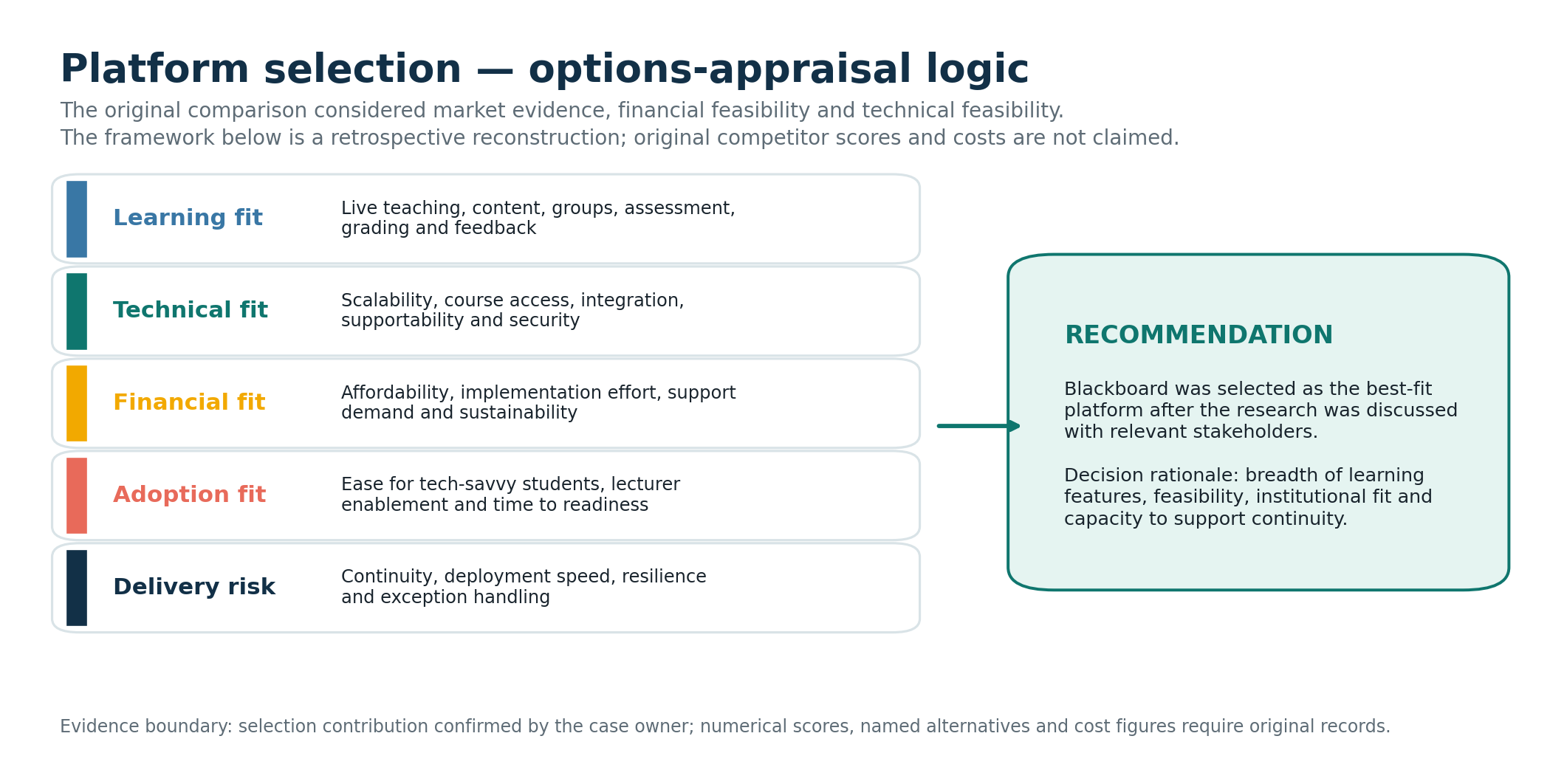
I researched leading online-learning platforms and reviewed success evidence before recommending a direction. The assessment considered both financial and technical feasibility, then moved into stakeholder discussion. This positions the case as an end-to-end change contribution: the platform was selected through structured analysis before users were asked to adopt it.
2.1. Decision criteria
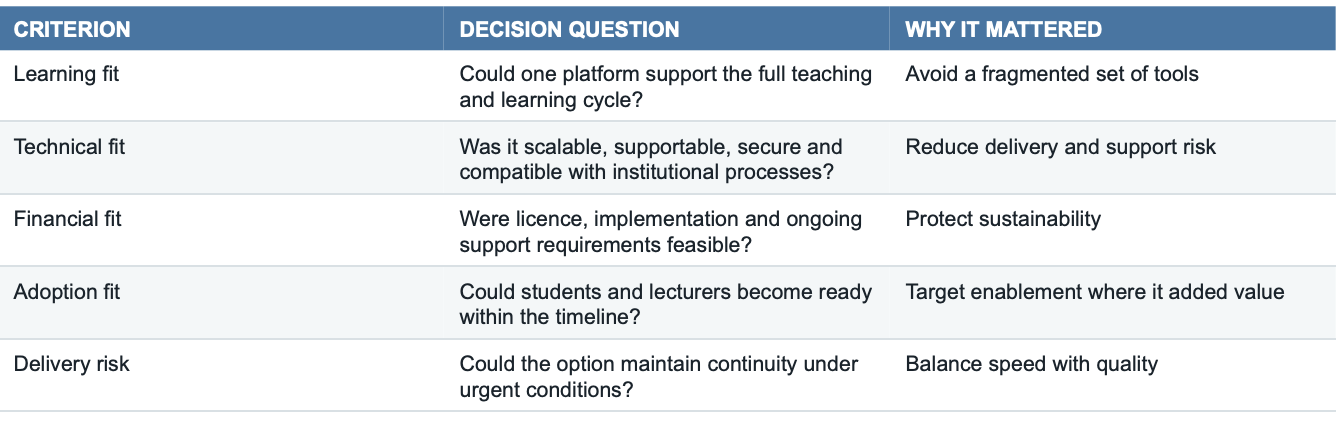
Decision: After the research and feasibility findings were discussed with relevant stakeholders, Blackboard was selected as the best-fit platform. Exact cost, success-rate and competitor-score claims are excluded until original records can verify them.
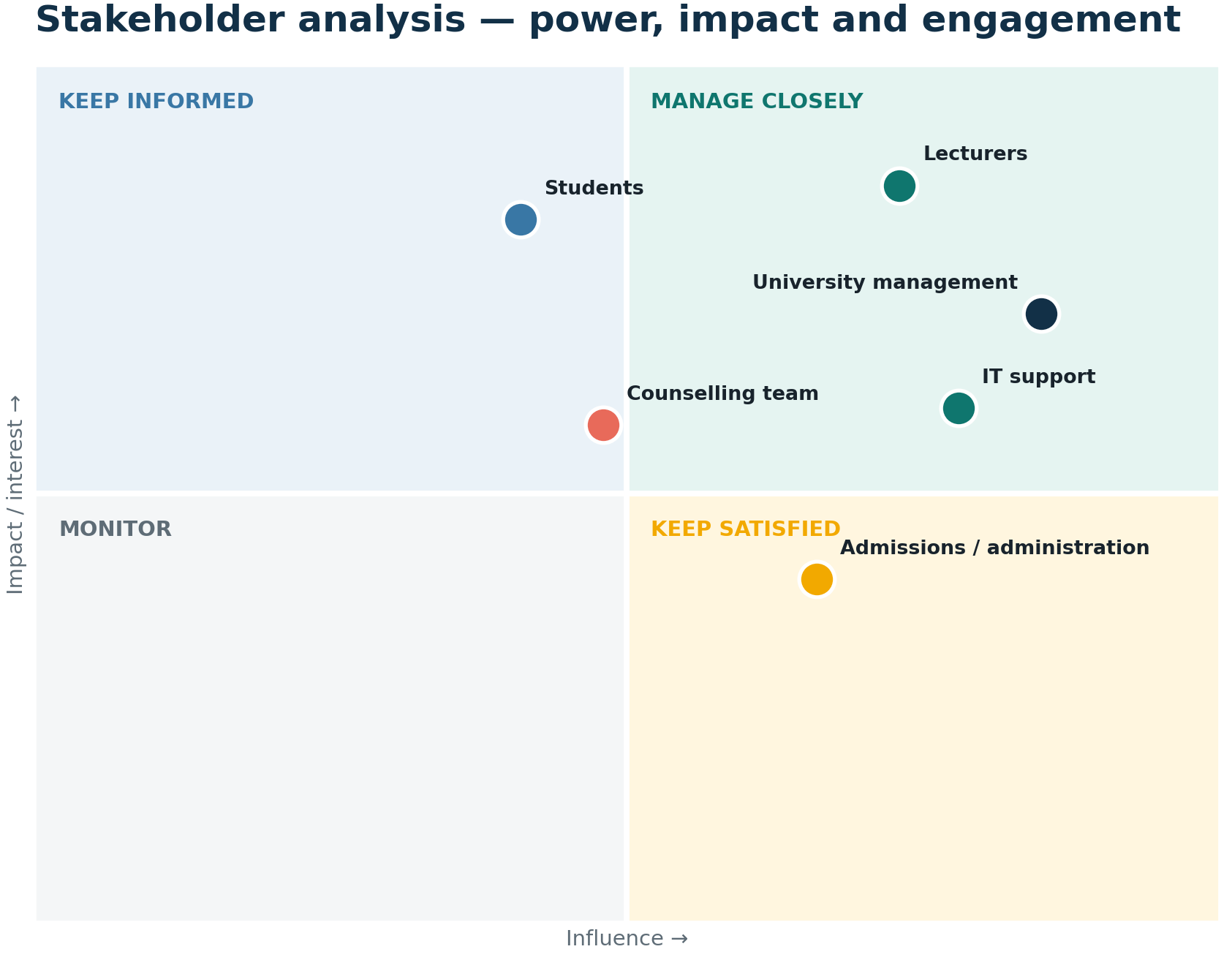
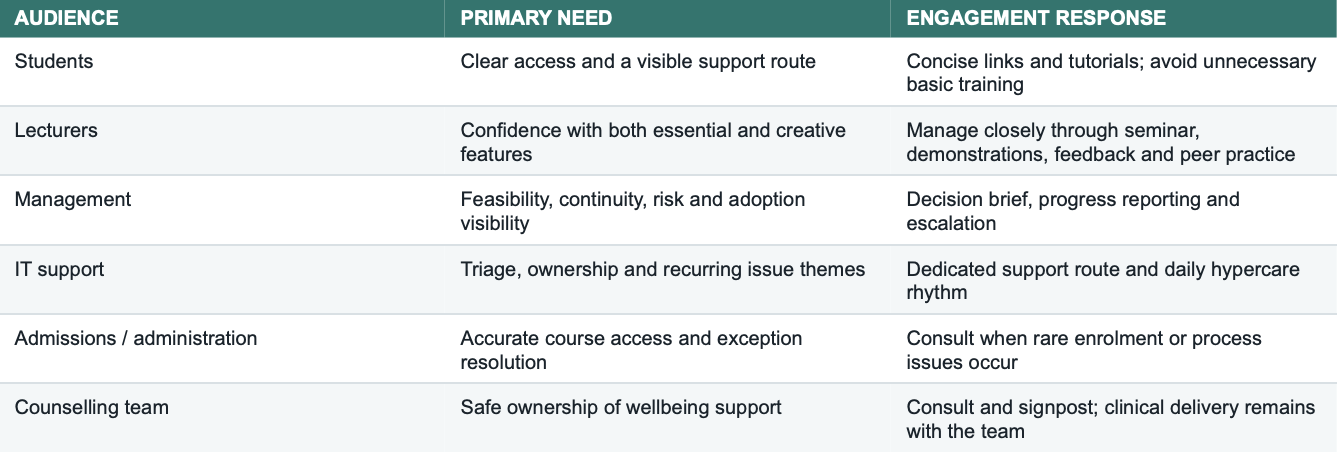
03 • STAKEHOLDER ANALYSIS AND ENGAGEMENT
04 • IMPACT AND READINESS
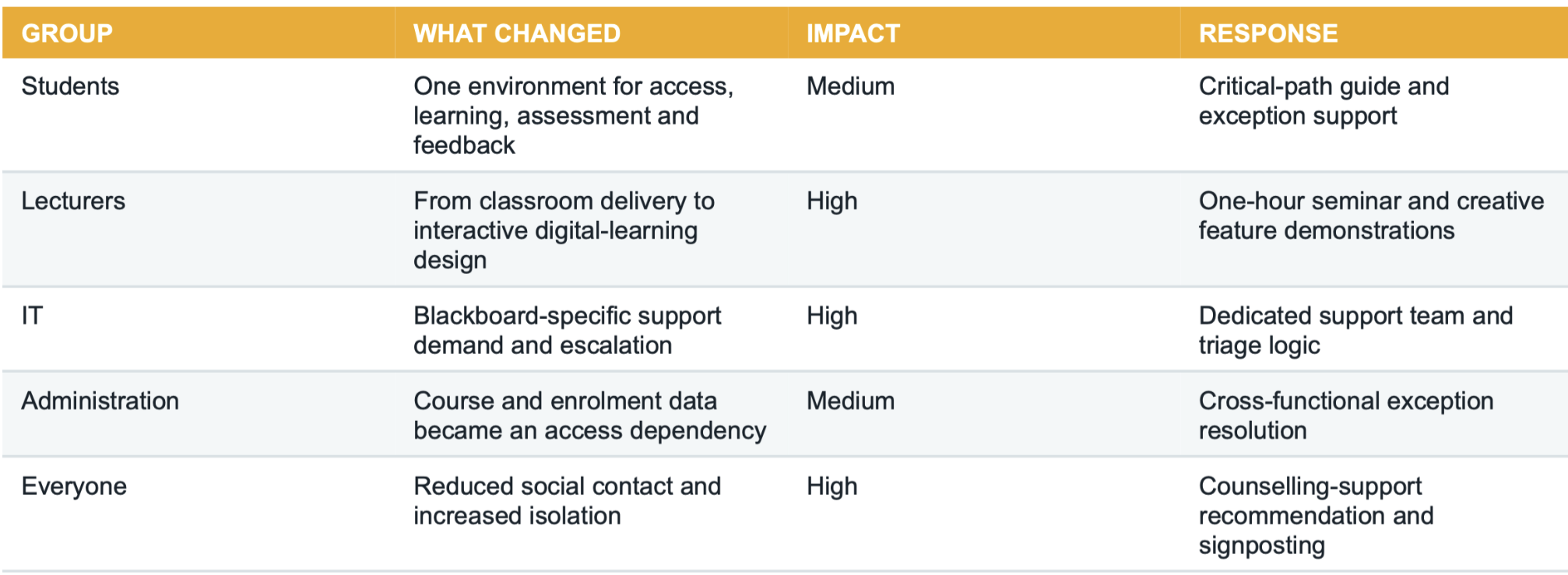
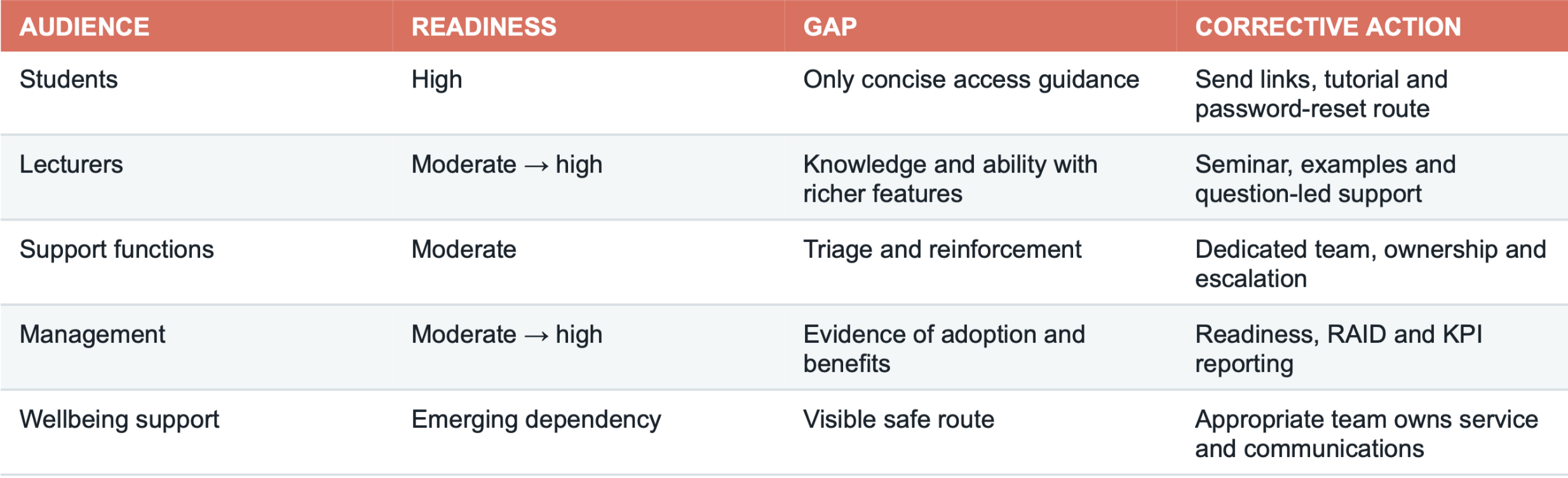
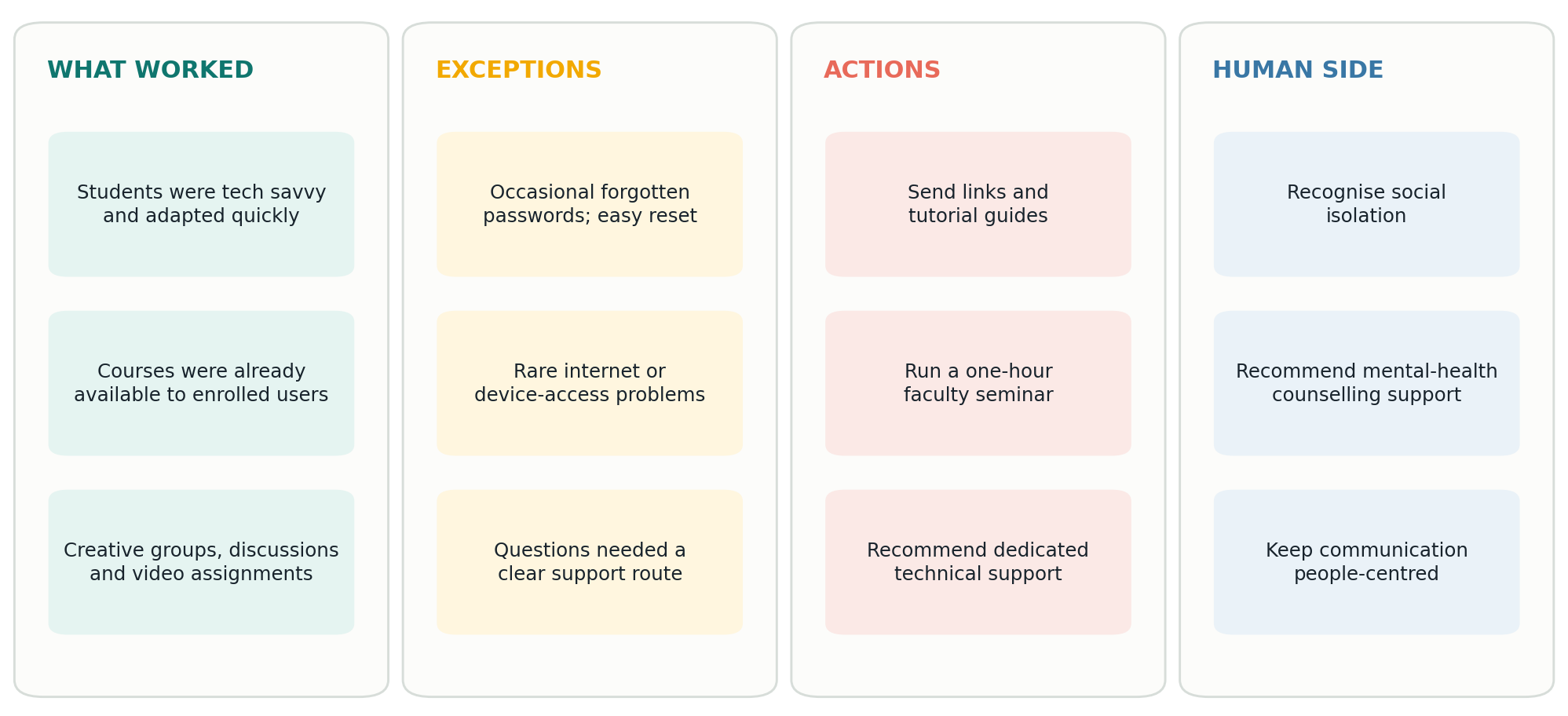
Key Insight: Students were generally tech savvy and did not struggle to learn Blackboard. Forgotten passwords occurred occasionally and were easy to reset; internet or device-access problems were uncommon. The higher-value intervention was lecturer enablement and clear support ownership.
4.1 Change-impact summary
4.3. Readiness by audience
05 • PROCESS ANALYSIS
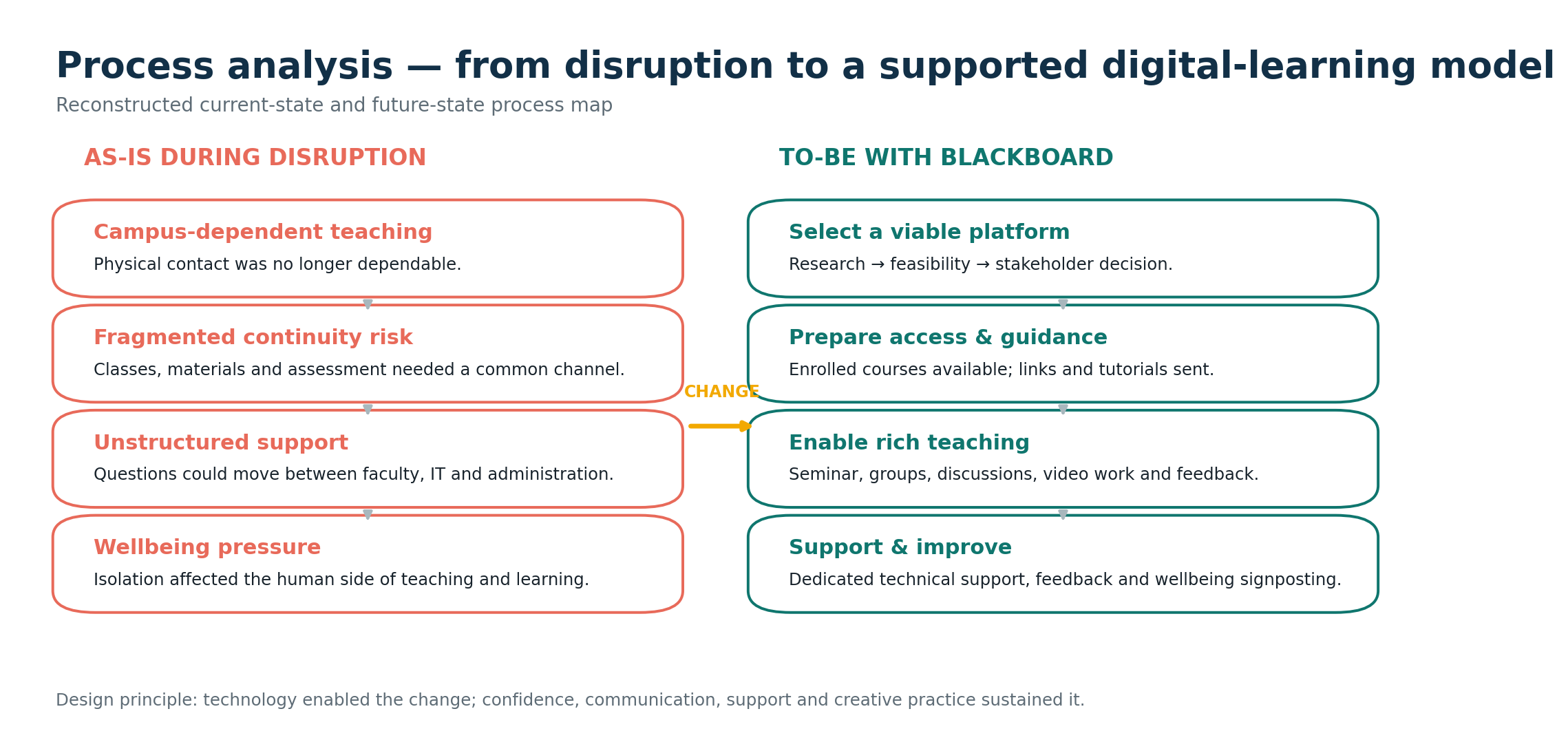
5.1 Future-state design principles
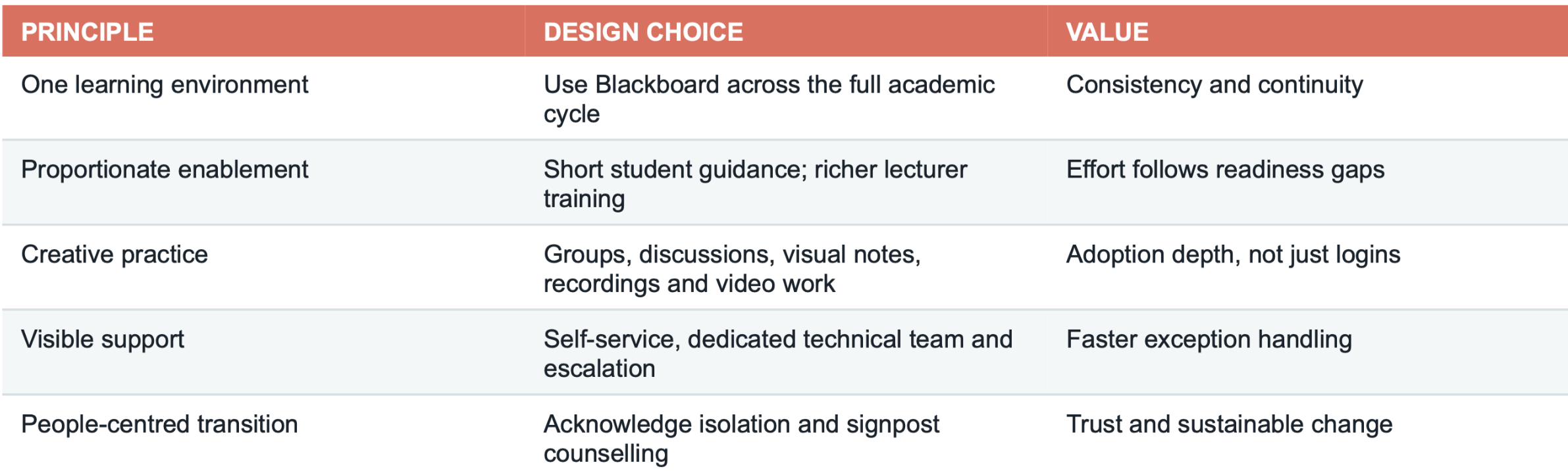
5.2. Key business rules
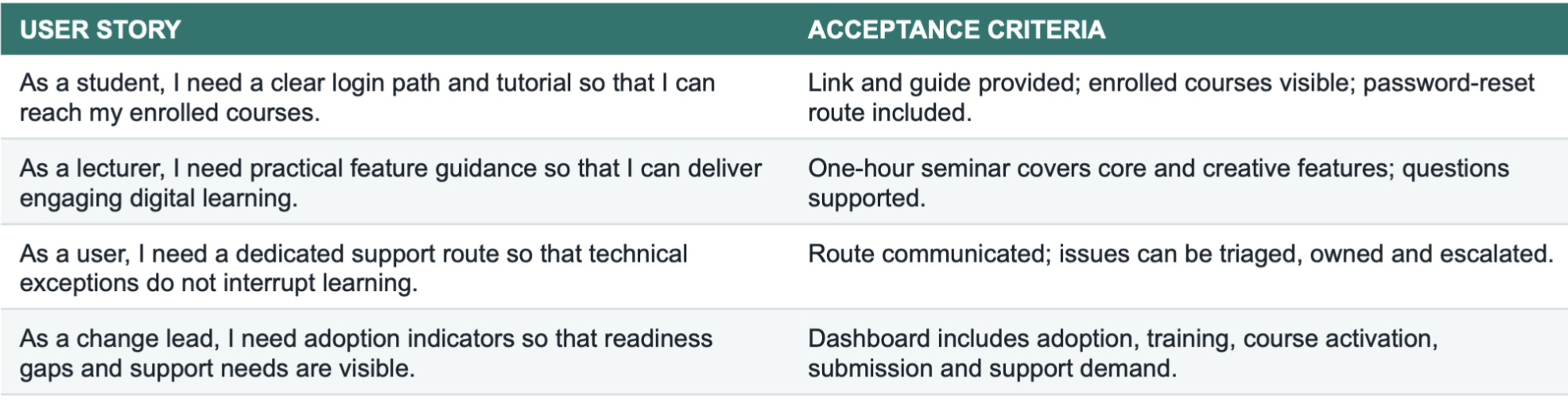
Students should reach the courses for which they are enrolled through a clear login path.
Password-reset guidance should resolve the most common access exception without unnecessary escalation.
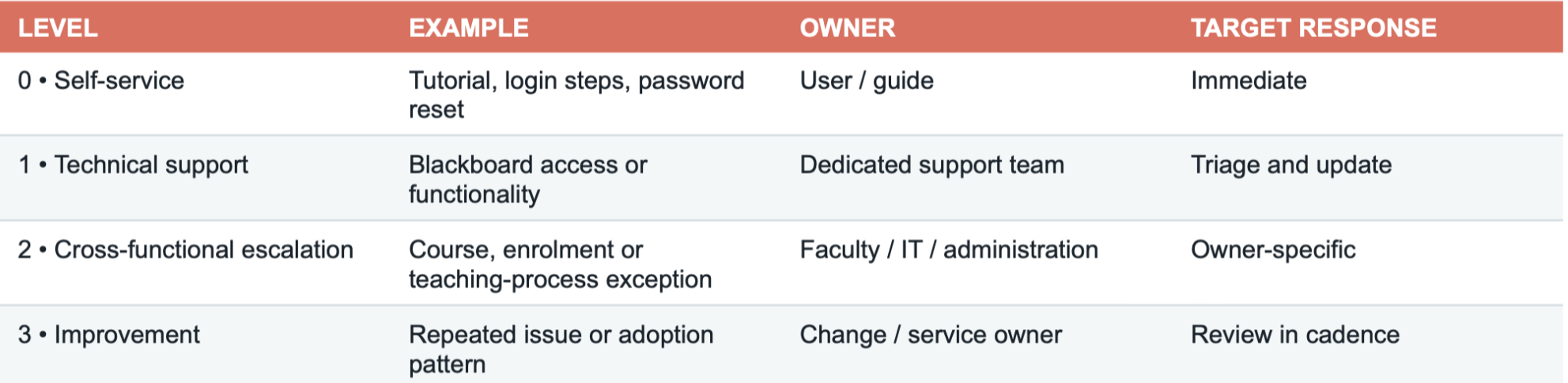
Technical, course-process, teaching-practice and wellbeing questions should have distinct owners.
Recurring support or feedback themes should feed a visible improvement backlog.
06 • CHANGE STRATEGY
ADKAR as an evidence-based retrospective lens
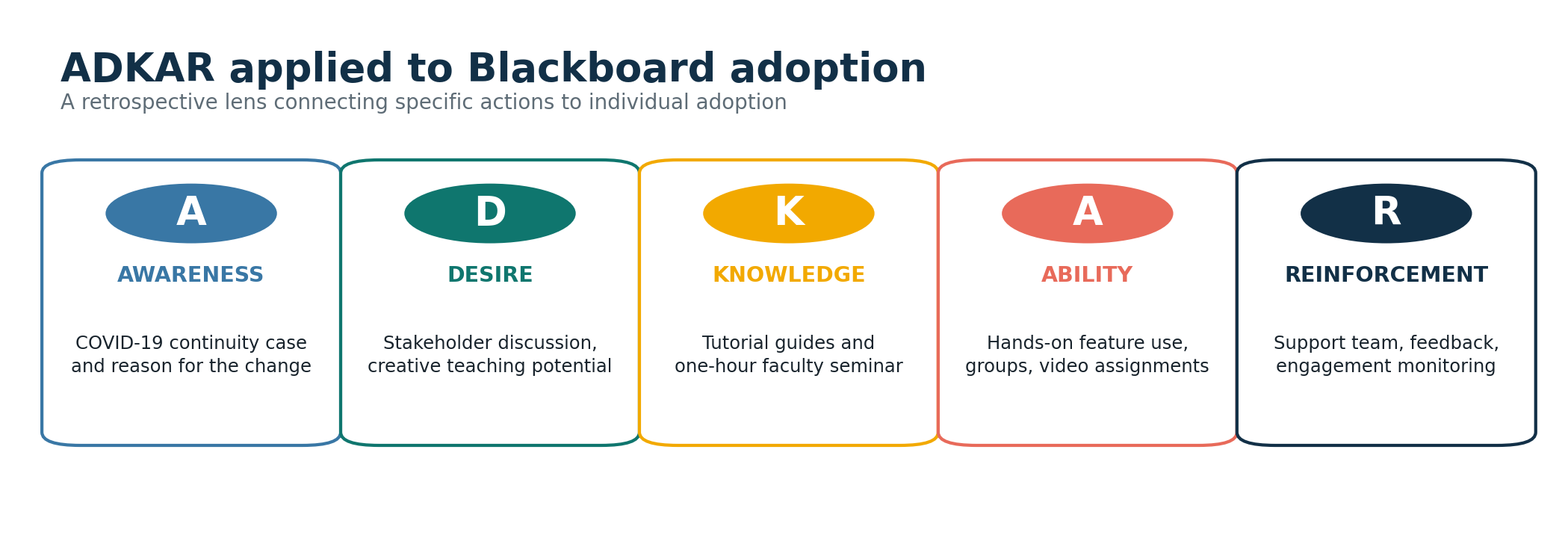
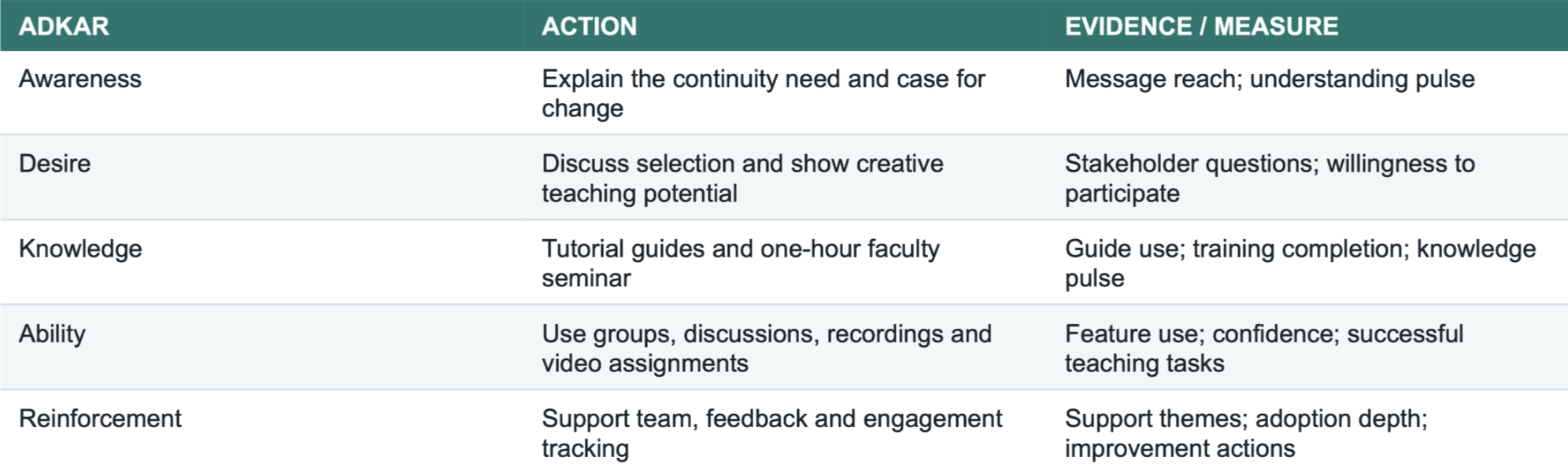
Resistance: No widespread student resistance is claimed. Risk management focused on lecturer confidence, underuse of richer functionality, support-route clarity and the wellbeing impact of isolation.
07 • COMMUNICATION AND ENABLEMENT
Students removed friction
Students received links and tutorial guidance explaining how to log in and reach the courses for which they were already registered. Because the audience was digitally confident, communication focused on the critical path, password-reset route and support access rather than excessive navigation training.
Lecturers built confidence and creativity
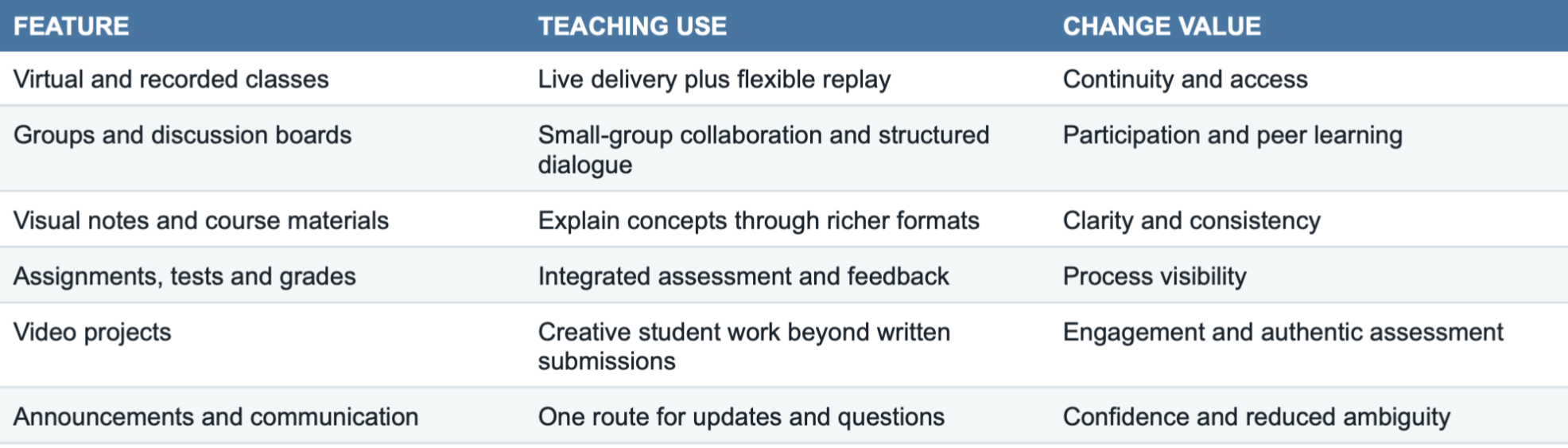
I organised and delivered a one-hour seminar for lecturers. The session explained core features, connected them with teaching activities and urged participants to use Blackboard to its full potential. It demonstrated that a digital-learning platform could create experiences that were more collaborative and creative than simply copying a classroom online.
How effectiveness was measured?
Training completion and confidence by lecturer group.
Successful completion of core teaching tasks and use of at least one interactive feature.
Question themes after the seminar and changes in support demand.
Student participation, assignment submission and qualitative feedback.
08 • WORKSHOPS AND FACILITATION
09. HYPER-CARE AND PEOPLE SUPPORT
Technical support model
I recommended a dedicated technical-support team so users had a clear place to raise issues. The recommendation was adopted. The portfolio reconstructs a practical triage model that separates quick self-service, technical escalation, course-process ownership and recurring improvement themes.
Wellbeing support and scope discipline
Remote learning solved a continuity problem while increasing social isolation. I recommended mental-health counselling support for lecturers and students. The service was developed, but I did not coordinate or operate the counselling team. This is a deliberate ownership boundary, not a missing achievement.
10 • REQUIREMENTS, VALIDATION AND GOVERNANCE
Representative user stories
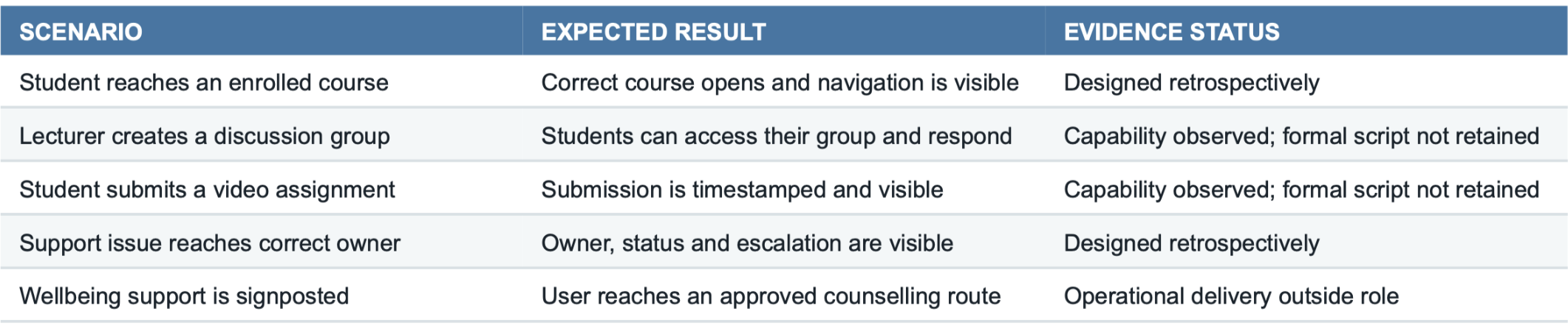
Validation design
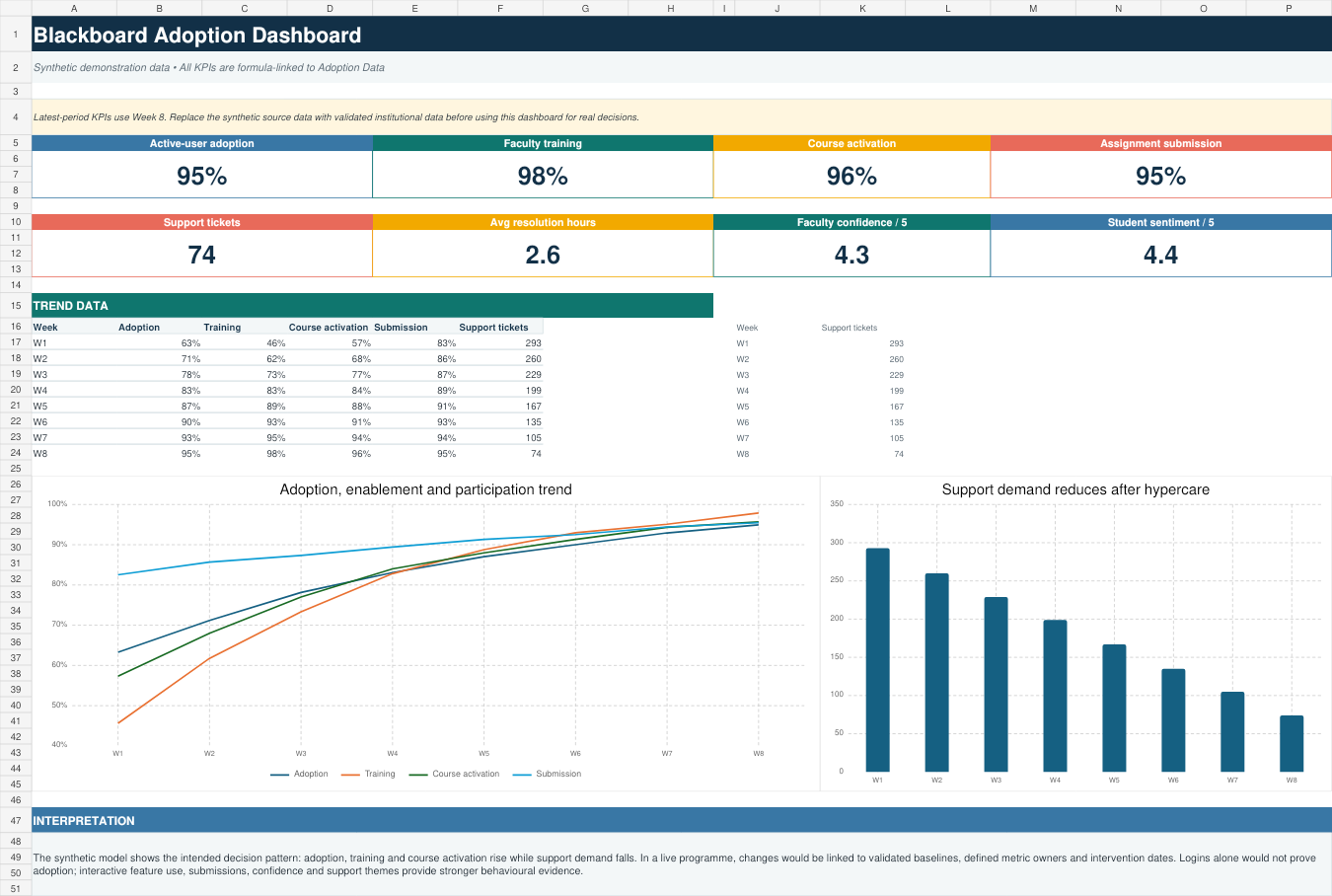
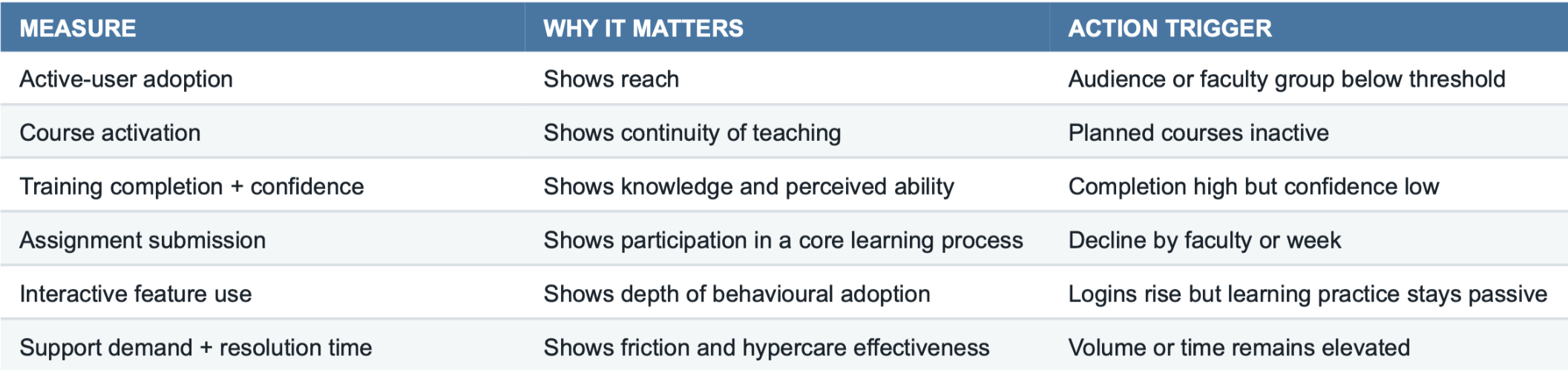
11 • ADOPTION MEASUREMENT
Confirmed qualitative outcomes
Blackboard supported the full teaching and learning cycle in one environment.
Students generally adapted quickly; forgotten passwords and connectivity/device issues were limited exceptions.
Lecturers used groups, discussions, visual notes, recorded content and video projects to make online learning more engaging.
A dedicated technical-support team was established after my recommendation.
Mental-health counselling support was developed after I raised the wellbeing need, with delivery owned by the appropriate team.
16 • REFLECTION AND LIMITATIONS
What I learned:
The right technology decision starts with learning needs, feasibility and operating context—not feature popularity alone.
Readiness is audience-specific. Tech-savvy students and lecturers designing digital pedagogy do not need the same intervention.
Creative use is a stronger adoption signal than login volume.
A visible support route and safe escalation model reinforce confidence after launch.
Wellbeing can be a material change dependency even when the technology works well.
Credibility increases when evidence, reconstruction and synthetic data are clearly separated.
Limitations
This portfolio is not a university audit. It does not publish confidential records, verified population-level success rates, original cost analysis or formal implementation logs. Quantitative visuals use synthetic data. Retrospective artefacts demonstrate professional method and are labelled accordingly.
PORTFOLIO CONCLUSION: The case demonstrates strategy, business analysis, facilitation, enablement, support design, governance and adoption thinking while also preserving the boundaries that make the story believable.